
- Boxing Day 2026 fixtures — all 10 fixtures, kick-offs and TV channels
- The full festive calendar — 40 games, 26 December to 7 January
- Rest days compared — which teams play twice in ~72 hours
- Rotation risk — the squads most exposed (Arsenal, City, Palace)
- A sensible festive staking approach — small samples, no chasing losses
- Frequently asked questions
The Boxing Day 2026 fixtures are a proper Boxing Day again: seven Premier League games on Saturday 26 December, three more on Sunday 27 December, and 40 matches in total between 26 December and 7 January. This guide lists the festive schedule, explains the rest-day traps hidden inside it — including the round where some teams play twice in about 72 hours — and sets out a sensible way to approach the most chaotic betting fortnight of the season.
Boxing Day 2026 fixtures — all 10 fixtures, kick-offs and TV channels
Boxing Day falls on a Saturday this year, and the Premier League has restored a full programme: seven matches on the day itself, the most since the schedule was thinned in recent seasons.
Saturday 26 December — Boxing Day
| Kick-off | Fixture |
|---|---|
| 12:30 | Aston Villa v Leeds United |
| 15:00 | Four matches in the traditional slot |
| 17:30 | Hull City v Liverpool |
| 20:00 | Newcastle United v Manchester City |
Sunday 27 December
| Kick-off | Fixture |
|---|---|
| 14:00 | Coventry City v Chelsea |
| 16:30 | Manchester United v Nottingham Forest |
| 19:00 | Crystal Palace v Arsenal |
The storylines write themselves. Boxing Day night closes with Newcastle v Manchester City — City, in poor form through November, travelling to one of the league’s hardest away grounds in the middle of the congestion. Sunday gives us Manchester United v Forest, a fixture between two clubs who spent November in the bottom four, and Palace v Arsenal in the evening: bottom against top, with Arsenal’s injury list the subplot of their whole festive run.
Broadcast selections move games between slots, so check the final TV listings nearer the day — and for Nigerian viewers, kick-offs run one hour ahead of the UK times shown (WAT = GMT+1), which makes that 20:00 Boxing Day closer a 21:00 prime-time match in Lagos.
The full festive calendar — 40 games, 26 December to 7 January
The Boxing Day 2026 fixtures are only the start. The festive programme runs through four match rounds:
| Round | Dates | What to know |
|---|---|---|
| Round 17 | 26–27 Dec | Boxing Day weekend: 10 fixtures |
| Round 18 | 29–30 Dec | The tightest turnaround of the period |
| Round 19 | 1–3 Jan | New Year fixtures, squads at their thinnest |
| Round 20 | To 7 Jan | The final round of the 40-game block |
Forty matches in thirteen days means every club plays four times in under a fortnight. There is no winter break to reset in the middle of it — the schedule is the story. By the New Year rounds, team selection stops being purely tactical and becomes medical: managers pick the players who can still run, and the quality gap between a club’s first eleven and its rotation options gets priced into results whether the market notices or not.
It is also, for readers in Nigeria, a wall of football across the holiday period — which is exactly why the staking approach in the final section matters more than any individual fixture read.
Rest days compared — which teams play twice in ~72 hours
The Premier League guarantees a minimum 60-hour break between festive fixtures, but a guarantee of fairness in hours is not equality in practice. The disparities bite hardest in the 29–30 December round, where the sequencing of the Boxing Day weekend and the midweek round means some teams effectively play twice in around 72 hours while their opponents have had an extra day — reporting on the schedule has already flagged specific pairings, such as Fulham v Arsenal, where the rest gap is uneven. That is the trap to watch for in the Boxing Day 2026 fixtures and the rounds that follow them.
Why an extra day matters so much in this window:
- Recovery is the training. Between festive games there is no meaningful tactical work — sessions are recovery and video. An extra day is an extra recovery cycle, and it compounds across four rounds.
- Soft-tissue injuries spike. The players who break down in late December are usually the ones who played every minute of the early rounds. Watch the team news from round 18 onwards for the hamstring and calf problems that thin squads precisely when rotation is most needed.
- Late goals change character. Tired teams concede late and chase games badly. A side playing its second game in 72 hours, away, against a fresher opponent is a specific, evidence-based angle — far stronger than generic “festive chaos” talk.
Before backing any team in rounds 18–20, check two things: how many days since their last game, and how many their opponents have had. It takes thirty seconds and it is the single most reliable festive-period check there is.
Rotation risk — the squads most exposed (Arsenal, City, Palace)
Three clubs carry specific rotation risks into the festive period, for different reasons — and the Boxing Day 2026 fixtures will expose them first:
- Arsenal are top of the league but arrive at December with a live injury list: Bukayo Saka has been out with a quadriceps injury (a return around 20 December has been estimated), Martín Zubimendi has a hamstring problem, and David Raya has been a shoulder doubt with Kepa deputising in Europe. If even two of those are still missing or being managed, Arsenal’s festive rotation at Palace (27 Dec) and beyond is forced, not chosen.
- Manchester City have the opposite problem: form, not fitness. One point from four league games in November, a manager under pressure, and a Boxing Day night trip to Newcastle in the middle of it. A team chasing its own tail rotates emotionally as much as physically — changes made to spark something rather than to rest someone.
- Crystal Palace are bottom, with a new manager (Thomas Frank, appointed 16 November) and the league’s most porous defence through November. Palace cannot rotate — they do not have the depth — so their festive risk is accumulation: the same tired players, four times in thirteen days, starting with Arsenal at home on 27 December.
The general rule: the thinner the squad and the worse the November injury list, the more a team’s festive results will sag below its season average. Price the squad, not the badge.
And one festive-specific warning for accumulator builders: with rotation this heavy, team news is not a detail, it is the bet. A leg picked on Monday can be a different team by Saturday. Our accumulator betting guide explains the multiplied margin; the festive period adds multiplied uncertainty on top of it. Festive goals angles are on our over 2.5 goals predictions page, updated through the period.
A sensible festive staking approach — small samples, no chasing losses
The festive period is the bookmakers’ favourite fortnight and should be the punter’s most disciplined. Forty games in thirteen days is a tiny sample of football wrapped in maximum noise: rotation, fatigue, weather, and teams playing their fourth game in under two weeks. Practical rules that respect that, for anyone betting the Boxing Day 2026 fixtures:
- Cut your stakes, not your standards. If anything, festive uncertainty argues for smaller stakes than a normal weekend — the opposite of what the fixture volume tempts people into.
- Bet fewer games. You do not need a position on all 40. The rest-day and team-news checks above will talk you out of most of them, and that is the system working.
- Do not chase across rounds. A bad Boxing Day followed by “winning it back” on 29 December is how a fun fortnight becomes an expensive one. Each round is a new decision, made on its own evidence — and remember that in Nigeria, winnings now carry a 5% withholding deduction at payout, which our betting tax guide explains in full.
- Use the daily pages, not momentum. Start each matchday from the Pick of the Day and the fixtures on our homepage, with the rest-day table in this guide beside you.
The festive period rewards the patient and taxes the impulsive — enjoy it as the best football fortnight of the year first, and a betting opportunity second — and the Boxing Day 2026 fixtures are the perfect place to start.
Frequently asked questions
How many Boxing Day 2026 fixtures are there?
Seven on Boxing Day itself (Saturday 26 December), including Aston Villa v Leeds at 12:30, Hull v Liverpool at 17:30 and Newcastle v Manchester City at 20:00 — plus three more on Sunday 27 December, making 10 fixtures in the Boxing Day round. In total, the Boxing Day 2026 fixtures open a 40-game festive block.
How many Premier League games are played over the festive period?
Forty matches between 26 December 2026 and 7 January 2027, across four rounds (26–27 Dec, 29–30 Dec, 1–3 Jan, and the round concluding by 7 Jan).
What is the minimum rest between festive fixtures?
The Premier League guarantees a minimum 60-hour break, but the sequencing still creates disparities — in the 29–30 December round some teams play twice in around 72 hours while opponents have had longer. Checking the rest gap before betting is the most reliable festive-period check.
Which big teams are most at risk from festive rotation?
Arsenal (live injuries to Saka and Zubimendi, Raya a doubt), Manchester City (poor form and a Boxing Day night trip to Newcastle) and Crystal Palace (bottom of the league, thin squad, no room to rotate) carry the clearest risks.
Is Boxing Day football on TV in Nigeria?
Yes — Premier League festive fixtures are broadcast as usual, with Nigerian kick-offs one hour ahead of UK times (WAT = GMT+1). Check your provider’s listings for the final channel assignments, as broadcast selections can move individual games between slots.
Responsible betting: Betting is for over-18s only. The festive period’s volume and excitement make it the easiest time of year to over-bet — set a budget for the whole period, never bet more than you can afford to lose, and never chase losses between rounds. If betting stops being fun, seek help from GambleAware (UK) or the responsible-gambling support offered by licensed operators in Nigeria.
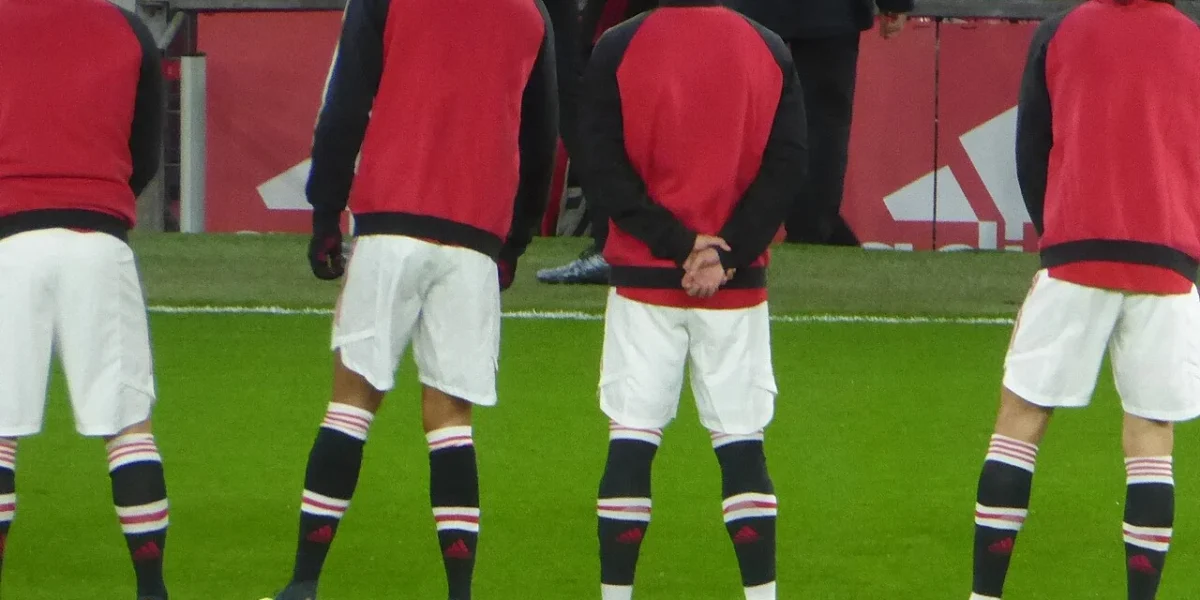
Photos: Ardfern, CC BY-SA 4.0 (Old Trafford, festive period); Göran Jönsson, CC BY-SA (Liverpool supporters) — via Wikimedia Commons

 By Niehof